Engineered Microencapsulation for Stability, Taste-Masking & Controlled Release
Standard raw acidulants like citric acid and volatile aromatic flavor compounds frequently suffer from moisture absorption (hygroscopicity), unwanted chemical interactions, rapid thermal degradation, or unpleasantly sharp taste profiles. Encapsulated ingredients use advanced fluid-bed microencapsulation, spray chilling, or coacervation technologies to apply a uniform, protective lipid or hydrocolloid shell around active core particles — providing precise temporal and physical separation between the active core and its external environment until a thermal, mechanical or solubility trigger releases it.
Encapsulated Citric Acid is standard food-grade citric acid encased in a protective micro-coating of vegetable lipids (hydrogenated palm oil, sunflower oil, or mono-/diglycerides), releasing acid only above 55–65°C or at a designed solubility trigger.
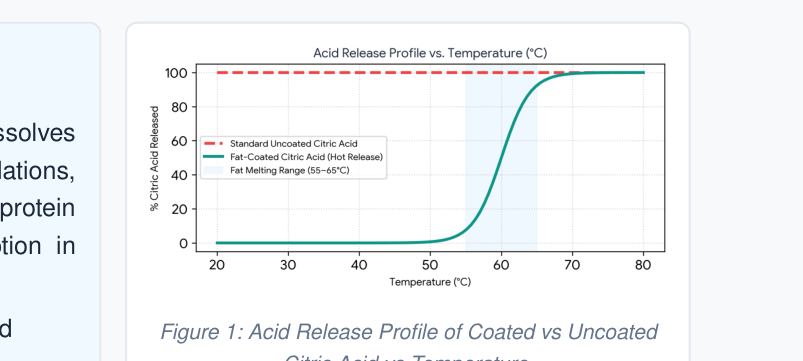

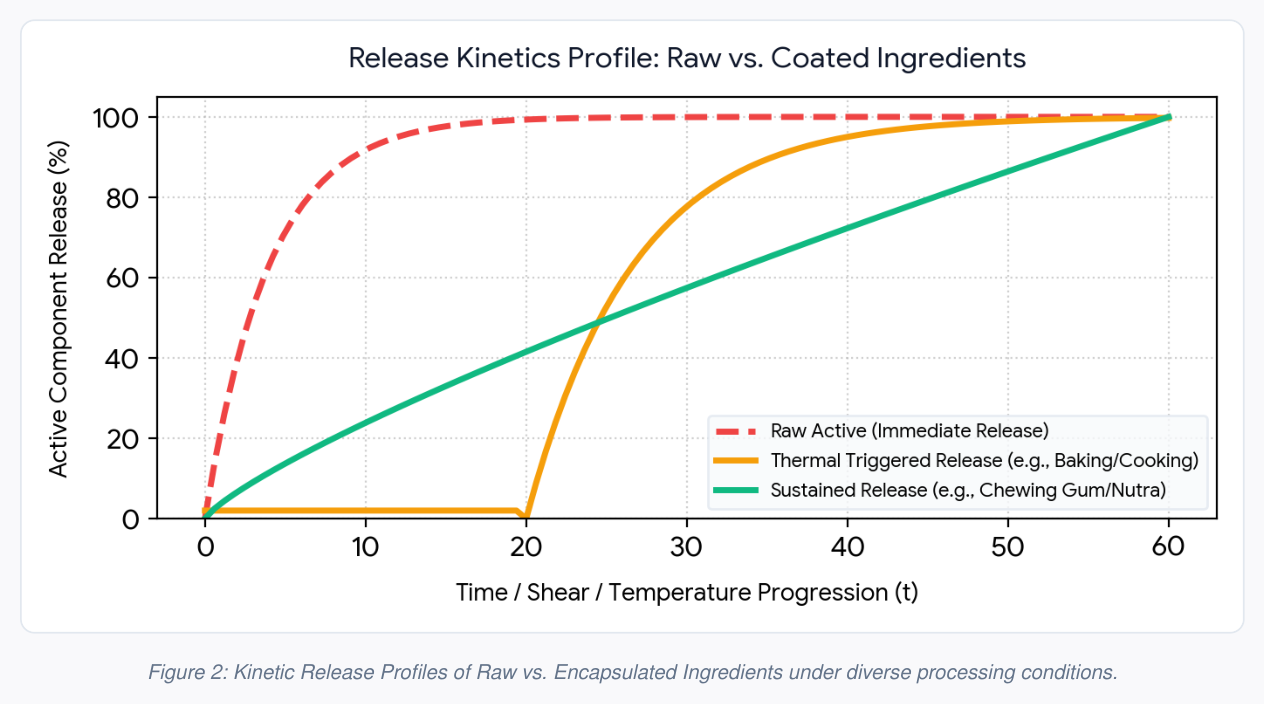
Flavor volatile compounds (citrus terpenes, botanical extracts, essential oils, delicate esters) are highly susceptible to oxidation, thermal degradation and evaporation. Microencapsulation converts liquid flavor oils into free-flowing, stable, dry powders with customizable release triggers.
Matching coating material and melt temperature to application sector.
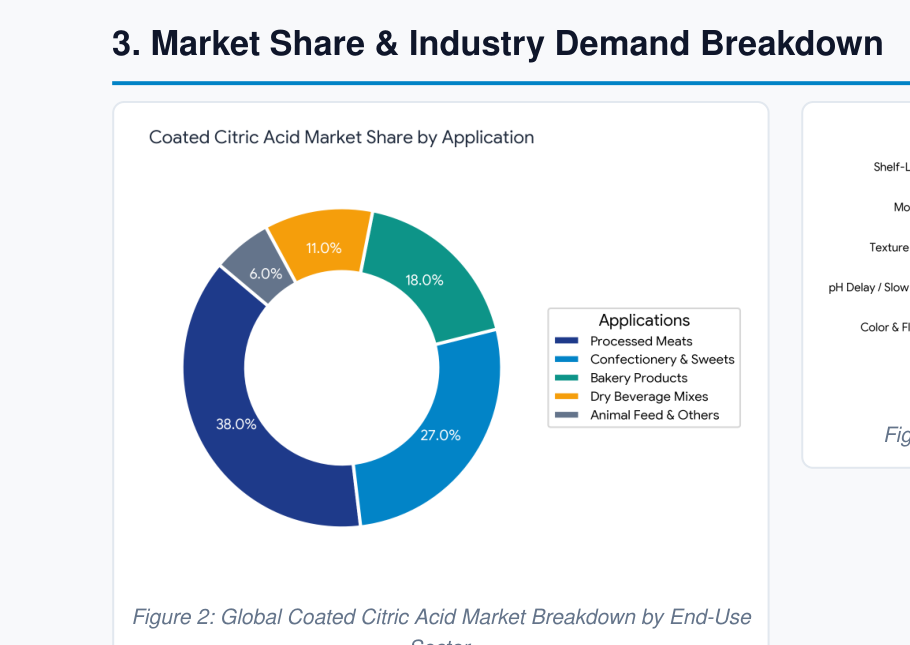
| Application Sector | Primary Coating Material | Melt Temp Range | Key Technical Function |
|---|---|---|---|
| Cured & Fermented Meats | Hydrogenated Palm / Vegetable Oil | 58–65°C (136–149°F) | Prevents premature gelation; lowers pH during cook cycle for safety. |
| Sour Confectionery | Vegetable Fat / Palm Stearin | 50–60°C (122–140°F) | Prevents candy sweating, sugar inversion, and surface moisture binding. |
| Dry Blends & Beverages | Maltodextrin / Fat Blend | Solubility trigger | Anti-caking agent, long shelf stability, free-flowing powder maintenance. |
| Frozen Dough & Bakery | Hydrogenated Soybean Oil | 60–68°C (140–154°F) | Preserves dough elasticity and gluten strength during proofing. |
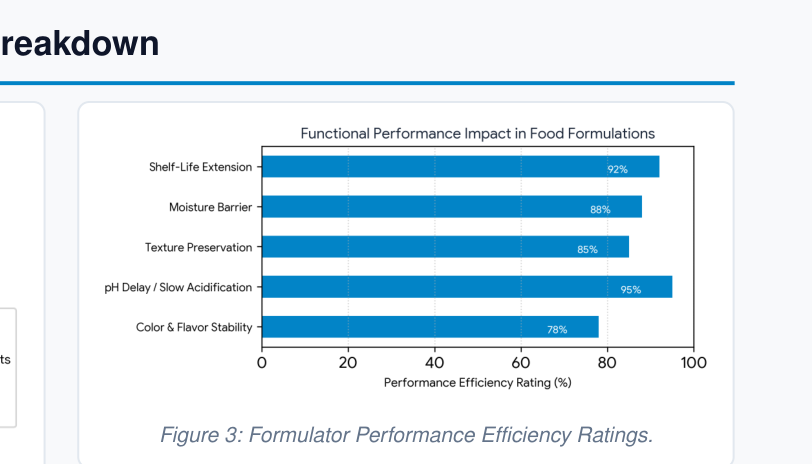
Encapsulated formulations vs. standard raw ingredients across key industry benchmarks.
| Performance Parameter | Raw Ingredients | Encapsulated Citric Acid | Encapsulated Flavours |
|---|---|---|---|
| Hygroscopicity & Caking | High (rapid moisture pickup) | Negligible | Negligible |
| Thermal Stability | Low (flavor flash-off) | Stable up to melt point | High (up to 220°C) |
| Release Timing | Instant (front-loaded) | Controlled / sustained | Shear / melt / dissolve |
| Matrix Interaction | High (gel/protein degradation) | Zero premature reaction | Inert during storage |
| Taste-Masking Efficiency | Poor (immediate sharp bite) | Excellent | Superior off-note masking |
| Shelf-Life Extension | Standard (6–12 months) | Extended (24+ months) | Extended (24+ months) |
Hydrogenated vegetable oil coatings with melting points typically set at 50°C, 60°C or 70°C. Ideal for baking, retort processing, and cooked meat products.
Semi-rigid matrix coatings. Ideal for chewing gum, chewable tablets, and confectionery where mastication crushes the protective capsule wall.
Water-soluble hydrocolloids (gum arabic, maltodextrin, modified starches). Ideal for dry instant beverage powders that release aroma immediately upon hydration.
Best practices: add coated ingredients near the end of the mixing/grinding cycle to avoid rupturing the shell under high shear; keep pre-cook blend temperatures below 45°C to keep the coating intact; and match particle mesh size (e.g. 20–40 mesh for meat sticks vs. 60–80 mesh for fine confectionery dusting) to the finished-product feel required.
Request tech specs, coating options, or a customised sample kit for Encapsulated Citric Acid or Encapsulated Flavours.
Request a Sample